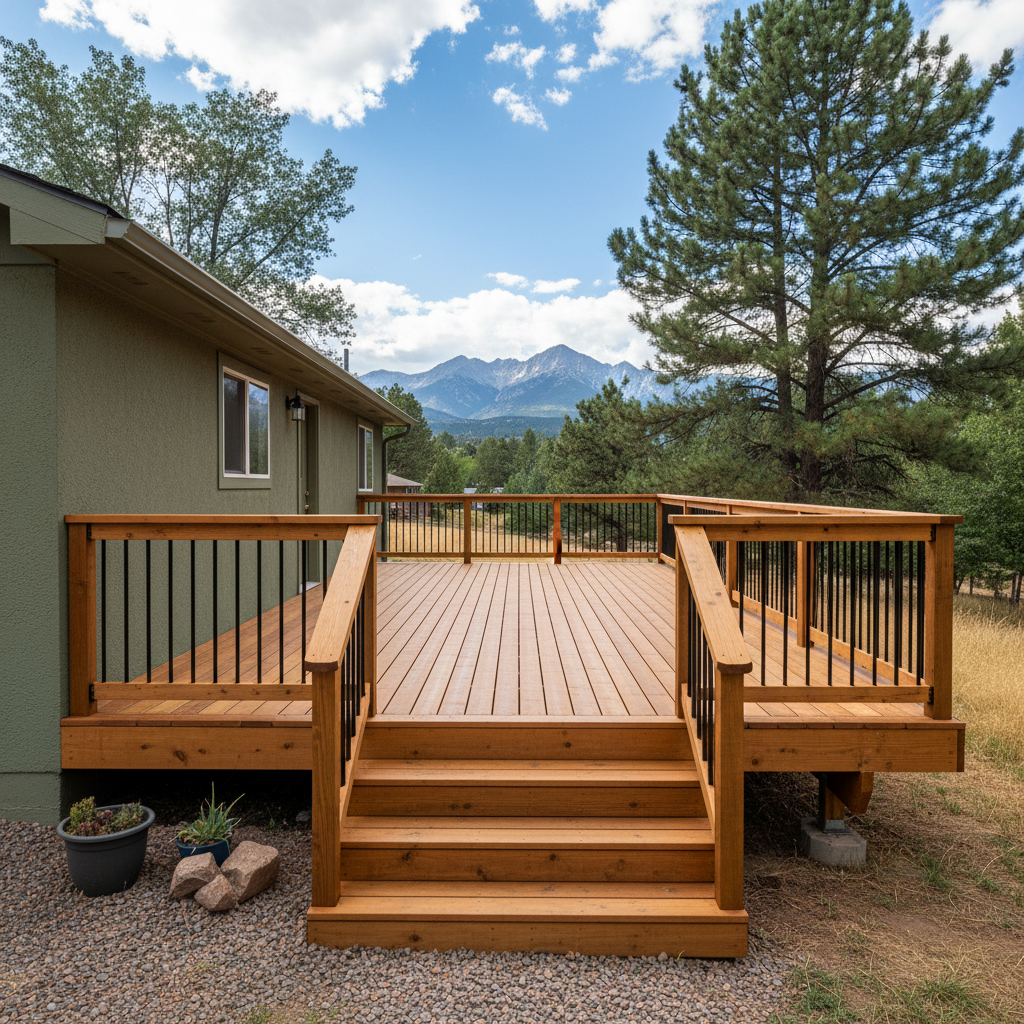
You stepped out onto your back deck this morning, heard a crunch underfoot, and found a soft spot that feels way too spongy. Our intense Boulder sun cycles, heavy spring wet snows, and dry mountain winds take a massive toll on outdoor wood and composite structures year after year. If you are staring down some neglected maintenance, you want to know what fixing it is actually going to cost you without getting hit with mystery line items.
Primetime Decks Boulder looks at damaged decks every single week. Let us break down realistic numbers so you can plan your budget, understand what goes into a professional quote, and keep your money in your pocket.
Typical Deck Repair Cost Ranges
Every deck has its own personality and its own specific set of problems, but real-world pricing generally falls into a few clear tiers based on the scale of the damage:
- Minor surface fixes: Swapping out a handful of splintered redwood boards or tightening loose hardware usually runs between $300 and $800.
- Railing repairs and stair stabilization: Fixing wobbly posts or replacing a damaged section of railing spans $500 to $1,500 depending on whether you are dealing with wood or custom metal.
- Partial resurfacing: Replacing worn surface decking and stair treads across a mid-sized footprint generally lands between $2,500 and $6,000.
- Structural framing repairs: Fixing rotted ledger boards, compromised joists, or failing support posts starts around $1,500 and can easily climb past $4,000 if we have to tear into complex multi-level framing.
What Actually Drives the Price Up?
If you have called around for quotes, you know prices can swing wildly. Here is what is actually moving the needle on your invoice:
Material type makes a huge difference. Fixing older cedar or pressure-treated pine is usually cheaper on materials upfront, but matching weathered grain takes careful time. If you have a composite deck built with hidden fasteners, repairs take longer because we cannot just slap a top-down screw through a board without ruining the look. Specialized clips, proprietary grooved boards, and high-end capped composites all push material costs higher.
Accessibility is another major factor around here. Boulder properties—especially up in the foothills or on sloped lots in neighborhoods like Table Mesa or Chautauqua—frequently feature second-story or terraced decks. If our crew has to haul heavy lumber up a steep hill or maneuver around tight backyard landscaping just to reach the underside of your framing, that extra labor time shows up in the estimate.
What Should Be Included in a Proper Quote?
A legitimate contractor will not just hand you a random note with a lump sum. When you get an itemized quote from Primetime Decks Boulder or any other reputable local builder, it ought to spell out exactly what you are paying for:
- Clear line items for specific materials, including board counts, fasteners, and framing lumber sizes.
- Exact labor breakdown, separating demolition and disposal of old rotted material from new installation.
- Disposal fees for hauling old treated wood or composite scraps off-site.
- Permit fee estimates if your local municipality requires structural inspection for ledger or joist work.
How to Avoid Overpaying
Nobody likes writing a large check for home repairs. You can protect your wallet by watching out for a few common pitfalls.
First, do not pay for a full replacement when you only need a targeted repair. Unscrupulous companies love to scare homeowners into tearing down a whole deck because of a few soft boards. If the ledger board is properly flashed and the structural posts are sound, you can safely resurface or repair sections for a fraction of a new build cost.
Second, get multiple bids, but compare apples to apples. If one contractor quotes you for surface boards only, and another quotes for replacing compromised joists underneath, those numbers will not match—and the cheaper bid might leave structural rot hidden underneath a brand-new surface.
Keep a close eye on minor problems before they turn into major structural headaches. Catching a loose ledger flashing detail after a heavy winter snowmelt can save you thousands down the road.